

Home > Job Sites > Asbestos Sites by City > Central New York Region > Armstrong
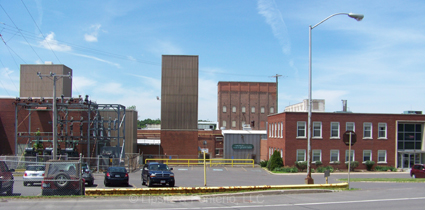
When in operation, Armstrong Fulton manufactured floor backing and gasket materials. It is estimated that, every day, the Armstrong Fulton plant used between 150 to 200 tons of raw asbestos in its manufacturing processes. Exposure to asbestos can cause mesothelioma, lung cancer and other asbestos-related diseases.
On a daily basis, pallets of asbestos bales were delivered to the Fulton plant by truck and rail. During the delivery process, these bales tore and ripped open, causing asbestos fibers to spill inside the plant. Employees at Armstrong, swept up raw asbestos from the plant’s floor with a power sweeper, causing clouds of fibers and dust to become airborne, which the employees subsequently inhaled.
Floor backing is a moisture-resistant, felt-like lining that is laid beneath floor boards and vinyl asbestos floor tile or linoleum tile. Workers at Armstrong manufactured floor backing by feeding raw asbestos through a series of pulpers, conveyers and batch tanks. In the process of pulping raw asbestos to create a slurry, asbestos dust and fibers became airborne and coated the plant’s equipment and machinery. The slurry was then fed through paper machines and formed into a sheet of paper of with varying thicknesses. The asbestos felt paper was then sent to cure in large dryers. After the paper dried, it was wound into different diameter rolls. The rolls were transferred to storage and shipped by rail or truck. In the process of manufacturing the floor backing, large amounts of asbestos dust and fibers were emitted into the plant that the workers inhaled.
Prior to the late 1970’s, asbestos-containing materials were utilized in Armstrong’s day-to-day plant operations. Asbestos-containing pipe covering lined steam and return lines. Asbestos cement and block insulation was applied to boilers. Hoods for dryers, used to cure floor backing, were lined with asbestos boards, which required frequent replacement. Due to normal wear and tear, these materials were removed and reapplied and, in the process, emitted dangerous levels of asbestos dust and fibers that contractors, maintenance personnel and workers inhaled.
The attorneys at Lipsitz & Ponterio, LLC have gathered a vast amount of information concerning the type and variety of asbestos-containing products at Armstrong’s Fulton facility. Our clients understand the importance of securing legal representation as soon as possible after a diagnosis of mesothelioma or lung cancer. If you or a loved one were once employed at Armstrong Fulton, and have been diagnosed with mesothelioma or lung cancer, we urge you to contact us regarding your legal rights.